Saturday, November 8, 2025

Don't Drop It Like It's Hot: Book Review of Patina


Patina (Track, #2)Patina by Jason Reynolds


Description

Patina is the second book in Jason Reynolds' Track series. Patina (Patty) has joined a new track team, and her first meet doesn’t go as she imagined. Her reaction does not garner any admiration from her coach. At the same time, she is adjusting to a new school, a private all girls school that is quite different from her old public school. She feels like she doesn’t fit in with the “hair flippers” and her new group project, she's the only one doing any work. 

These current challenges are built on top of more difficult family wounds. Patty’s father died in his sleep when she was little and her mother’s health problems make it too difficult for her to take care of Patty and her sister. Instead, they live with Patty’s uncle and aunt.

Track is Patty’s reprieve from her life. And at track practice, she has Ghost, Sunny, and Lu—the other newbies on the team who look out for her as she looks out for them. But now, she has been placed on the relay team and she must learn to work--no, run--in tandem. 


Would I Teach This Book?

Would I teach this Patina? I currently teach Ghost, the first book in the series, and it is a student favorite. I can see offering Patina as a choice for students who already read Ghost. Patty has strength and determination as well as vulnerability. Her challenges with fitting in at a new school would resonate with many students. She would be also a great character to focus on her growth. Not to mention that Jason Reynolds is just an all around great writer, and I enjoy reading and teaching his books.

Sunday, October 26, 2025

What Comes Easy for Some: Book Review of Out of the Easy


Out of the EasyOut of the Easy by Ruta Sepetys


Description

Out of the Easy by Ruta Sepetys was a book club choice. The main character, Josie, knows the sketchy side of New Orleans because she was born into it. Well, moved into it when she was a little girl. Her mother is a prostitute working in Willie’s house, and she long ago expected Josie to fend for herself. Willie keeps an eye out for her, after a fashion, and pays her to clean the rooms in the house. Josie also has a second, more respectable job, working in the bookstore where she also lives.

Josie exists in her overlapping worlds of books and brothel until a customer at the bookstore assumes she is a college student. Josie begins to dream of a way out—if only the Big Easy will let her go. But for Josie, the trouble is just beginning.

Would I Teach this book?


Would I teach Out of the Easy? As I was reading Out of the Easy, I kept feeling like a thread was missing, the strongest thread that would guide all the subplots, and that at any moment, the real plot would emerge. But, spoiler alert: the main plot did not emerge. It was not a bad or boring read, but it was not the kind of gripping plot, where it has you in its talons, and you’re sneaking off to your room just to grab a few pages. It is not the kind of gripping I am looking for when I choose a book to teach. In addition, the seedy underworld of New Orleans, and especially Willie’s brothel, did not fulfill the promise of seediness. Willie’s brother felt too homy and cheery, compared to how I imagine a real brothel to be. To be fair, I have never actually been inside a brothel, but based on what we know about sex workers and how they are treated, I doubt that it is comparable to dorm life.

As a coming of age novel, Out of the Easy leaves much to be desired, and I would not classify it as YA.

Friday, October 17, 2025

Sometimes, Only an Allegory Will Do: Book Review of The Measure


The MeasureThe Measure by Nikki Erlick


Description

The Measure by Nikki Erlick has an extraordinary premise: one morning every person in the world over the age of twenty-two receives a box with a string inside that represents the length of their life. Once everyone understands the significance of the box, some people choose not to open theirs, but many let curiosity get the better of themselves and decide to find out how much time they have left. To the horror of some, they discover that they have “short strings,” meaning they will die young. As the world decides how to respond to this new information, there are also individuals who seek to capitalize off of the newfound vulnerability of society.

The Measure has an ensemble cast, told from the point of view of several characters in a few different orbits. Nina and Maura, a couple who has been together for two years, seem to be the link between most of the characters. They choose to open their boxes together and then must contend with the heartbreak of their uneven strings.

The Measure is my book club's pick for October. Of the books we have read so far this year, it is my second favorite, second only to The Ten Thousand Doors of January.


Would I teach this book? 

Short answer: yes. Longer answer is in considering how I might use it. The Measure can be read as an allegory for not just prejudice, but also for privilege. Everyone gets a string that they have done nothing to merit. While longer strings do suggest the propensity to live a better life, the people who receive them do so arbitrarily, not because they have been more giving or more successful. Likewise, those that have received a shorter string have done nothing to deserve less time on this earth. Just as no person has done anything to deserve the circumstances they are born into, whether that means for their benefit or their detriment, those circumstances are often used to judge people or are ignored when considering a person’s ability to succeed or fail. Similarly to how privilege and belonging to a marginalized group are discussed, string length becomes politically divisive.


As in most allegories, as string length is something that does not exist, for some, they will have an easier time understanding how what we are born with and born into can impact our chances and therefore choices, and even more so when society creates unjust limitations.

That being said, while I have not taught a novel in a composition class, I know that some courses do kick off the semester with one. The Measure would be an interesting way to begin a political discourse and to examine the way that people discuss privilege, prejudice, and politics. Especially since The Measure does not begin and end on allegory, but instead creates a full and emotionally engaging novel, the discussion of plot could significantly contribute to engagement. It sounds like Erlick could offer a potentially effective way to introduce students to their status as academic interlocutors.

If you have taught or taken a composition class that used a novel or other full-length book, I would love to hear from you about your experience.

Monday, October 6, 2025

Beware of Aswang: Book Review of Marikit and the Ocean of Stars


Marikit and the Ocean of StarsMarikit and the Ocean of Stars by Caris Avendaño Cruz


Gratitude

Thank you to the Montgomery County Public Library for making Marikit and the Ocean of Stars readily available for public use. 

Description

In Marikit and the Ocean of Stars by Caris Avendeño Cruz, Marikit’s birthday wish is to have a blue fairy dress—more beautiful than the wealthy girl’s yellow fairy dress—so beautiful no one would ever pick on her for her shabby clothes again.

And why shouldn’t she have such a beautiful dress? Her mother is the best seamstress, everyone agrees. When she asks her mother for the dress, she also points out that her recent birthdays have been sad affairs. Since the deaths of her father and brother while they were fishing, there have been many unhappy times for Marikit and her mother.

All of Marikit’s hoping and dreaming could not prepare her for the dress her mother makes—nor could it prepare her for the adventure ahead. Nothing could have prepared Marikit for that—not for the new friends, enemies, and lands she will see. And certainly not for the ways she’ll be tested.


Would I teach this book? 

Marikit and the Ocean of Stars has adventures, fairies, and a wide range of imaginary creatures from Filipino folklore. There is excitement and danger and a wide cast of characters. The supporting cast outshines Marikit, who, while she is described as brave and does exhibit some bravery, does not have as much depth of personality as other characters.

The book is a bit below the reading level for middle school, so I would probably not choose it to teach, but it would be good for a classroom library, to include a variety of reading levels. If I taught elementary, I would consider it for a fourth grade class, where it would be more compatible. I could also see the possibility of including it in a literature class on contemporary folklore, as it does include Filipino mythological creatures in inventive ways.

View all my reviews

Sunday, September 28, 2025

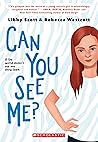
It's All about Perception: Book Review of Can You See Me?


Can You See Me?Can You See Me? by Libby Scott and Rebecca Westcott


Description

Can You See Me by Libby Scott and Rebecca Westcott is the story of Tally, a girl entering sixth grade who has autism spectrum disorder. Tally has many concerns about going into sixth grade, which is in a different school building than fifth grade. She is afraid of getting lost, she is afraid of older kids giving swirlies, and when she learns that her friend likes Luke, the boy who bullied her through the lower grades, she has the added fear that she will be around him more often.

When people have an understanding of Tally’s experience of the world, it makes life a lot easier–but most people don’t understand, and even if they do, they are not always able or willing to make accommodations for her. But, as Tally writes in the journal, what makes her different can also be a superpower.


Reading about Tally’s experience was emotionally challenging, as the way it is written makes it clear that when people see Tally’s responses to things she is asked to do, they perceive that she is being difficult, rebellious, or even throwing a fit. But Tally has pathological demand avoidance (PDA) which makes following direct instructions impossible for her. People can word instructions for her less directly, such as suggestions or choices, and this makes it possible for her to comply. Otherwise, she must squish her brain in different directions, such as waiting before getting started or completing the task slowly. Sometimes, however, she is unable to do this, and she might respond by yelling or with another action that looks like refusal, but is actually her trying to cope with the intense anxiety PDA brings on. From the point of view of her parents or sister, who cannot experience what happens to her, it seems as though leaving the house can be nearly impossible. Carefully wording everything that is said to her would take practice, patience, and lots of empathy.

One of my favorite parts of the book is the relationship that Tally builds with a teacher that begins as an amusing misunderstanding but develops into an important ally at school. It is helpful to see how both Tally and the teacher navigate communication.


Would I Teach This Book?

Can You See Me is co-written by Libby Scott and Rebecca Westcott. Rebecca Westcott is an educator who has published several books and Libby Scott is a younger author for whom Can You See Me? was her first book. She was still a child at the time she cowrote it with Westcott. Scott lent her experiences of having autism spectrum disorder to writing the book. The descriptions in the book feel true, and in the sections that serve as Tally’s journal tell us, the book does give an idea of what having autism spectrum disorder is like for one person.

I checked out Can You See Me? from the Wheaton Library in order to see if it would be a good choice for my classroom library, and I think that it would be. We read Rules by Cynthia Lord, and while the experience of the main character is that of a girl of a similar age whose brother has autism spectrum disorder, the experience of the brother and his character development are lacking, so Can You See Me? would be a good companion. In the future, I might also consider teaching it. It was published in 2021, and there is merit to offering both current books and those that have lasted a few decades. I am curious about the sequel, Do You Know Me?, and would consider reading it.

View all my reviews

Monday, September 22, 2025

Friday's Child Is Loving and Giving: Book Review of Daughters of Shandong


Daughters of ShandongDaughters of Shandong by Eve J. Chung


Daughters of Shandong by Eve J Chung was a book club pick. It is historical fiction set during the Communist uprising in China. The book is difficult to read due to the violence and dire circumstances that Hai, her mother, and her sister must endure; but is definitely worth reading. 

Description

When the Ang family gets word that the Communist army will soon be in Zucheng and that it will not be safe for land owners, Hai’s father leaves with her grandparents, aunt, uncle, and cousins, with only Hai, her mother, and her two younger sisters staying in the house. When Hai’s mother asks her husband and his family to take the girls and leave her behind, the mother in law refuses, saying that they would only be a burden to slow them down. With this one callous choice, the mother and girls are set on a terrifying journey where safety and caring for basic needs are always in question.

Perhaps the greatest trauma is when Hai is made to suffer the consequences of the Ang family’s long history of owning land and working the villagers too hard and with too little income. The irony of the situation is not lost on Hai, who has no rights and would not inheritance because she is a female. In fact, she has been left behind because she, as a girl, is of no practical use to her family.


As Hai moves with her mother and sisters through China, mostly on foot, and with no reliable sustenance or place to live, she learns to survive in whatever way that she can–eating from the garbage, helping her mother make match boxes, and trying to build her own business ventures. The message from her family is very clear: women are less than second class citizens, they are possessions that mean little beyond domestic work and birthing boys. Though, painfully, Hai sees other fathers who care deeply for their wives and daughters, and will take any risk to get back to them. 

As Hai and her closest sister, Di, both struggle to live, Hai stays close to her mother, loyal and supporting her and her sisters. Di looks out for herself first, keeping her earnings and findings largely to herself. She does not feel the same pull of filial piety that guides Hai, who supports her mother even when she does not agree or is angry with her.

Amidst the extreme difficulties of life on their own, Hai finds some comfort in her ability to make choices instead of being ruled over by her grandmother. She cannot help but feel heartbroken over being left behind by her father, but she is also not eager to return to his home.


Would I teach this book? 

The Daughters of Shandong seems to be well-researched and describes a path that many Chinese people travelled during that time period. Hai is a strong character who is likeable and seems able to overcome an overwhelming helplessness  that pervades her life. The prose itself does not sparkle, but the story almost makes up for what it lacks in the narration. For these reasons, it seems like a book that I would consider teaching.

View all my reviews

Friday, September 19, 2025

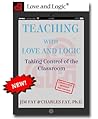
We Do It with Love: Book Review of Teaching with Love and Logic


Teaching with Love and Logic: Taking Control of the ClassroomTeaching with Love and Logic: Taking Control of the Classroom by Jim Fay


Description

Teaching with Love and Logic by Jim Fay and Charles Fay, Ph.D. was the professional development (PD) reading for my school this summer. Last summer, I attended Responsive Classroom training. Several years ago, in a different school, we had a PD day on another classroom management system. Though I cannot remember what it was called, I found that several things did not square with how I interact with students. For example, when a student was off task, you were supposed to just point at the board so that they could see what they were supposed to be doing and not answer any of their questions. Other things I found helpful–such as giving students a chance to review the instructions on their own instead of answering questions immediately after they have been let loose to do their work.

At the heart of Teaching with Love and Logic in the Classroom is managing interactions with students. First, to let them know that you are paying attention to them, then to set boundaries for behavior in the classroom, and finally to make sure that students have a chance to find solutions for any mistakes they make.


Basically, Teaching with Love and Logic in the Classroom posits that difficult students should be approached first with being told that the teacher observes something about them, such as an interest. Over time, the teacher comments on observations, and eventually the student will begin to change their behavior, since they have been recognized. There is also a focus on restorative justice, and when a student disrupts the learning of other students, they should do an act of restorative justice. Further, the onus for making changes should be on the student and not the teacher.

The primary difference I noticed between Teaching with Love and Logic and Responsive Classroom is that Teaching with Love and Logic focuses on building relationships while Responsive Classroom focuses on building routines and systems within the classroom. There is a lot of overlap between the two and there are many good strategies that teachers can use from both books.


Would I teach this book? 

Teaching with Love and Logic does offer many good strategies for teachers to use. The writing of the book, however, can be a bit hokey at times. The interactions between teachers and students, for example, do not sound like real children. And there are a few moments when teachers say things to the students that I find especially grating. For example, when a student is not doing what they are supposed to be doing, a teacher asks, “Do you hate me?” This seems like an odd thing to say to a student, even as a joke. A child’s behavior may be in part a response to a teacher, but one of the most important things to remember as a teacher is not to take their behavior personally. While I teach middle school students, they are still children, and they are often unable to articulate their emotions. Suggesting that their behavior has some sort of personal origin, even as a joke, does not feel comfortable to me. The focus of learning is not on the teacher, but on the student. While I care deeply about my students, I do not focus on how they feel about me, nor do I want it to come up as a topic of conversation.

While there are many helpful suggestions in Teaching with Love and Logic, in the scenario that I was teaching a classroom management class, I believe I would likely choose a different book.

View all my reviews