Tuesday, July 21, 2026

Walk the Walk: The Long Walk Book Review


The Long WalkThe Long Walk by Richard Bachman


Gratitude

Thank you to Montgomery County Public Library for making The Long Walk by Stephen King (originally published under the pseudonym Richard Bachman) readily available to the public at no cost.

Description

Ray was chosen as 1 of 100 boys who will participate in the Long Walk, a contest in which the prize is whatever you want, and the way you get it is to be the last one still walking. The catch is that if they slow down too often, stop too long, or break any of the other rules, a soldier in the pace vehicle shoots them. So, not only is the winner the only one still walking, he is also the only one still alive. Although he has applied and been chosen for the context, Ray claims he doesn’t know what he wants.

It may seem shocking that anyone would volunteer to participate in the Long Walk--their chances are 1% to win and 99% that they will not only lose, but die. Who, except someone totally confident, or totally desperate, would accept that challenge? Except it’s not just the prize. It’s also the fame and taking part in a national pastime--the boys who are participating in the walk also watched it when they were little kids--standing on the side of the road when the walk came through, as though they were watching a parade, cheering and celebrating.


It is also clear that something is askance in this society--Ray’s father was arrested under mysterious circumstances, and the Major--the man in charge--seems like a particularly unsavory character who for sure does not believe in the great freedoms, like free speech and free press.

Ray finds some walking buddies who he sticks with. They swap stories, encourage each other, and just keep each other company. The boys are referred to by their last names, and by defining characteristics. There are, of course, some really nice guys, a really jerky guy, and the mysterious guy who doesn’t seem to fit in anywhere.


Would I Teach This Book?

Would I teach The Long Walk? Parts of the book are trying too hard. There are moments between the boys that rely more on mysterious subtext than what is actually occurring in the book. I won’t get into the ending, but that is definitely one of them.

The book is clearly not just about an ultramarathon walk that will winnow out many good young men--the plot is too thin for it to be just that. It is clearly also working on a metaphoric level, considering what happens when freedom and choices are taken away, and what happens to youth when they are convinced to do things that are less in their best interest and more in the interest of the larger society or government.

I suppose that The Long Walk could be taught alongside 1984, but I cannot create an argument for how The Long Walk could ever stand beside 1984. It is a possibility, I suppose, in a themed literature class on political fear.


View all my reviews

Wednesday, July 15, 2026

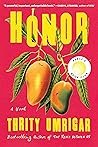
There's No Place Like the Home You Fled: Book Review of Honor


HonorHonor by Thrity Umrigar


Gratitude

Thank you to my book club for choosing Honor by Thrity Umrigar.

Description

In Honor, Smita is a foreign correspondent, and she spends her life traveling the world and reporting on issues of human rights. Though born in India, Smita moved to the United States as a girl, and she vowed never to return to her country of origin, instead using the United States as her infrequently used home base. So when a fellow journalist needs her help with an assignment in India, she is extremely apprehensive about returning, but decides to go because she wants to aid the friend who had been so caring toward her. Basically, she feels that she cannot say no.


Once there, Smita is drawn into the case a Hindu woman, Meena, who has been met with violence as a result of marrying a Muslim man. Meena shows an openness that Smita finds hard to understand. To help navigate tricky interviews and spots that are potentially dangerous for women, Mohan has been tasked with being Smita's guide. As her friendship with Mohan develops, it seems that it might become something more. 

Would I Teach This Book?

Umrigar considers a lot of different dynamics in Honor--honor to one’s family of origin, to one’s self, to one’s spouse, and honor as it pertains to religion. The choices that Smita makes and the past she must face are not easy. The threads to her past unravel slowly throughout the book, and looking back at the beginning, it is not exactly seamless.


There was a lot of buildup toward a few moments of violence, and I felt a growing dread as the narrative moved toward these moments. It was not a pleasant dread, either. The violence did seem to be more than just plot devices, and it did help to establish and explore theme.

Because of the exploration of prejudice between Hindus and Muslims, Honor might be an interesting novel to teach. The book club discussion was lively and touched on many different aspects of the novel, and these aspects could also be analyzed in a classroom setting. However, I would be reluctant to trudge back into those waters. I won't spoil the ending, but it was pretty meh. 


View all my reviews

Sunday, July 12, 2026

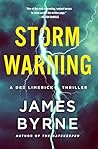
He's Single, Ladies!: Book Review of Storm Warning


Storm Warning (Dez Limerick, #4)Storm Warning by James Byrne


Gratitude

Thank you to Minotaur and Goodreads Giveaways for the review copy of Storm Warning by James Byrne.

Description

Desmond “Dez” Limerick is hired by the United States government to investigate a secret underground research facility that, along with the mine and the whole island up above, has lost all communications. What exactly they were researching is a mystery, but Dez quickly learns that the U.S. government is not the only group who has an interest in why everything went dark. He is teamed up with a small group and soon meets up with other people who intend to investigate the island. It is not immediately clear who he can trust, but a few people make themselves known as untrustworthy right away. Oh, and there is a treacherous storm headed toward the island which will make it virtually impossible to get there. Dez is always up for a challenge, but he’s especially invested in solving this one, because a former love interest was in the lab when it went dark.


Would I Teach This Book?

Would I teach Storm Warning? That is an interesting question, for a few reasons. The biggest reason is that Dez is not a complicated character. He is practically perfect in every way: strong, handsome, smart, and respectful to the ladies. He knows everything--hand to hand combat, computers, how elevators work, languages, obscure facts about world politics, and histories of developing countries. He has no mysterious past, his closets are clear of skeletons, and he never gets ruffled. He is a bit too perfect for my post-postmodern tastes.


He is a Bond-MacGyver-Bruce Lee mix who could save you from any situation. Byrne makes much of his muscled physique, and as a freelancer, he may go and do as he pleases.

Storm Warning is entertaining--there were certainly moments that surprised me, and it took me a while to figure out how it would end, as opposed to many suspenseful books, which I can already guess what will happen no later than halfway through. As a beach read, I encourage anyone who enjoys this genre to read Storm Warning. As a teacher, I would skip this one.

Sunday, July 5, 2026

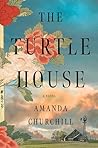
Turtle Confusion: Book Review of The Turtle House


The Turtle HouseThe Turtle House by Amanda Churchill

Description

In The Turtle House by Amanda Churchill, Lia has left her job and come home under mysterious circumstances. There, she finds her grandmother, Mineko, also staying at her parents’ house, due to a fire that destroyed her home.

Lia’s parents suspect that Mineko caused the fire by falling asleep while smoking. They fear that she can no longer live on her own. As for Lia, they have no idea why she quit her job at an architectural firm in order to come home and work in a stationary store.

Lia asks her grandmother to tell her her story—she knows so little about the woman who left Japan for a new life in America with her military husband. As Mineko talks, she also tries to help her granddaughter to face whatever is haunting her.


Would I Teach This Book?

Would I teach The Turtle House? As historical fiction, set during World War II and after, Amanda Churchill blends romance, war, family drama, and modern day early adulthood in this generational story. The twining narratives of Mineko and Lia inform each other and help the reader to understand the struggle to keep one’s own dreams from being sublimated by another’s.


This is a compelling theme, and it is gratifying to see Mineko’s growth throughout the book. Lia’s growth and narrative is way less satisfying, in part because she is at the beginning of adulthood, but she is also not as developed of a character as Mineko.

The Turtle House was a book club book, and it brought about lively discussion. As for including it in a curriculum, the perspectives of Mineko and Lia, as Japanese Americans, could be a meaningful contribution, though there are arguably books with more compelling Japanese American characters.

Tuesday, June 30, 2026

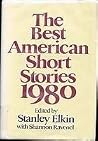
Just Give Me That Old Time Rock 'n' Roll: Best American Short Stories 1980


The Best American Short Stories 1980The Best American Short Stories 1980 by Stanley Elkin


Gratitude


Personal History

I have been lowkey working my way through The Best American Short Stories series, which began in the early 20th century and continues today. The series has been through many editorships, and starting in 1978, the editor would choose a different author to work with each year. The series editor would read most every short story published in literary journals in US and Canada and then hand the top two hundred or so to the famous author, who would whittle the choices down to around twenty.

Volumes of The Best American Short Stories were used in my college courses, and I, in turn, have used them in my college courses. One of the benefits of reading the series and using it for courses is that it varies from year to year, some offerings better than others. Paired with another anthology, it adds variety and contemporary tastes.


The 1980 edition is a bit different from some of the other volumes I have read. First, several of the stories felt like very long short stories, and not always pleasantly so. Second, I was surprised by the amount of marital dissatisfaction and affairs. I am not astounded that people might be unhappy with their marriages and might cheat, however, I am surprised by the sheer number of stories which focused on this. It seemed like there was an inordinate amount of extra-marital affairs.

Two stand outs are “The Old Forest” by Peter Taylor, which, while it is about a young man who has been caught cheating on his fiancĂ©e, also explores the gender politics of the situation; and “At the Anarchists’ Convention” by John Sayles, which while it did not have much weight, was very funny. It is hilariously set, as the story states, at a convention of older anarchists at a yearly convention. The social politics are like that of a family, deep, interconnected, and inherently amusing.


Would I Teach This Book?

Would I teach The Best American Short Stories 1980? I have taught many volumes of The Best American Short Stories, but have not taught any retro volumes. I would not teach this retro volume. I admit that this was the only time I have ever been bored by Best American Short Stories. There were several times when it felt painful to keep going. My daughter asked me why I felt I had to finish it, and I explained that I never DNF books, and she asked what that was, and I explained. But, it’s true--it might take me years to finish books, as I read other books in between, but I always come back to finish them. In part, because I believe that every book has something to teach me, whether I enjoy it or not.

What was your last DNF? Let me know in the comments! 


View all my reviews

Thursday, June 25, 2026

You Know What Happens When You Assume, Don't You?: Book Review of Reckless


Reckless (The Powerless Trilogy, #2)Reckless by Lauren Roberts


Gratitude

Thank you to Montgomery County Public Libraries for making Reckless by Lauren Roberts available to the public at no cost.


Description

Reckless begins in the aftermath where Powerless left off: Paedyn is on the run, Kitt, now king, is furious, and Kai is unsure how to feel about any of it. Kitt sends Kai (who is his Enforcer first and his brother a far second) to find Paedyn and bring her back to the palace. There is no guarantee that Kai will be successful in his mission.


Would I Teach This Book?

Would I teach this book? Reckless has many of the challenges that Powerless has: Kai is meant to be an assassin, and his main job is to eradicate the kingdom of all Ordinaries, the people without powers who have been falsely accused of passing a disease on to the Elites, those who do have powers. Falling in love with a man whose mission in life is to unquestioningly kill people like you does not seem like a healthy choice.


It is made clear, just as it is in Powerless, that Kai is a product of his environment--his father tortured him and taught him to torture others. He was expected to kill and he knew that if he did not, the consequences would be dire--perhaps death. Regardless of how sympathetic he is, he still murders as commanded, and therefore, does not make healthy boyfriend material. You can feel sympathetically toward the dog who has been abused, and you can see how fun it is to play with him, but that does not mean that it is on you to bring the dangerous creature home as your pet. Kai might have had no control of how his father raised him, but that does not mean that Paedyn needs to take on a man who was created to kill her.


Sorry not sorry, but no matter how attractive the MMC is, whether or not it is his fault or not, if he has dangerous emotional baggage, the FMC does not need to take him and his exploding, poisonous luggage on her journey. It seems that sometimes when everything in you says that you should run, then you should run, regardless of your attraction. Just saying. And this does not seem to be the romantic situation that should be served to young readers, over and over again.

The sequel is also significantly lighter on plot than Powerless. The romance is a lot less convincing and a lot less satisfying. So, no, I cannot see myself teaching Reckless.


View all my reviews

Thursday, June 18, 2026

Wash That Man Right Out of My Hair: The Women of the Copper Country


The Women of the Copper CountryThe Women of the Copper Country by Mary Doria Russell


Gratitude

Thank you to Montgomery County Public Libraries for making The Woman of the Copper Country by Mary Doria Russell free and readily available to the public.

Description

The Women of the Copper Country is based on the true story of a copper miners’ union strike in Calumet, MI. As copper mining is extremely dangerous, all of the women have lost people close to them--fathers, brothers, husbands--sons. They do not own their houses and have very little to live off of. When the one-man drill comes into use, they are not only worried about the jobs that it will cost, but also about the danger to the man operating the drill--a man alone can get into as many troublesome spots as a man with a partner, but a man alone has no one to help him out of those spots.


When a non-union worker who agreed to use the drill dies alone, Annie Clements decides that enough is enough. The strike is on.

James McNaughton does not see himself as the villain--he sees himself as the man hired to make the company--and himself--the most amount of money possible. He views the strike as ungratefulness. It is by his benevolence alone that the miners and their families are able to survive.


Would I Teach This Book? 

Would I teach The Women of the Copper Country? Russell’s book was a book club pick, and I doubt I would have picked it up on my own. My take on the book is a little different from my fellow club members. The general consensus was that they had seen this book before in other iterations that they had read in the book club, before my time. As I had not been present for those books, and I generally do not pick up historical fiction books independently, this book did not feel like something I had already read.

Annie is difficult to dislike--she has a big heart, courage, and a can-do attitude. She wants the lives of the people in her community to be fair--they should be able to work safely, and they should have the means to live a slightly less strenuous life. She believes in their right to negotiate as a group.


In a class on historical fiction, the labor movement, or gender studies, The Women of the Copper Country could be a contender. The terrible forces that the unions were up against, and the way that the companies were able to act as they wanted without regulation is hair-raising. I know some about the fight for labor, but I did not know the extent of it. The difficulties that people went through so that workers today can have the ability to collectively bargain is nearly unbelievable. And it's a story that Americans should know. 


View all my reviews

Friday, May 8, 2026

Home, Home with the Ranger: Book Review of The Ruins of Gorlan


The Ruins of Gorlan (Ranger's Apprentice, #1)The Ruins of Gorlan by John Flanagan


Description

In John Flanagan's The Ruins of Gorlan Will has been a ward of the kingdom since his birth, keeping him separated from most children his age. He was told his father died a hero, and he clung to the hope that he, too, would become a knight. But Will does not have the brawn a knight needs, and instead is invited to become the apprentice to a ranger.

Will is devastated. The rangers do not carry the same honor as knights, though they are feared, and rumored to be sorcerers. One of his wardmates—a constant tormentor—is sent to battle school, furthering Will’s upset. Since he does not have much say in the matter, he decides to do his best as the ranger’s apprentice.


As it turns out, the rangers gather intelligence and help in battles. They are the defense before war—and no one is eager to tread back into war. They hide in the shadows and make it their business to know the movements of enemies.

Soon, Will finds out that there is a lot more to being a ranger than scrubbing the floor—though his master has him do that, too.


Would I teach this book? 

The Ranger’s Apprentice: The Ruins of Gorlan is the first in a middle grade series. Many educators seek to get their students into series, with the thought that they will read their way through. If I were giving students a few choices of books, I might consider including it in a unit. There is action, and Will is a strong character, as is Horace, who has a parallel story line while he is in battle school. I was not blown over by the premise—the setting is a medieval-ish land that seems to follow the rules of reality, with the exception of some monsters. It reminded me a lot of Blackthorn Key, but I was more interested in the background of Blackthorn Key. It did come highly recommended from one student, so it may pique the interest of others. Definitely a good choice for a classroom or child’s library.

Friday, April 17, 2026

Spit in the Air, Learn a Lesson: Book Review of Just After Sunset


Just After SunsetJust After Sunset by Stephen King


Gratitude

Thank you to the Montgomery County Public Libraries for making Stephen King’s Just After Sunset easily accessible to the public at no charge.

Description

Just After Sunset came out in 2008, when the world, as they say, was a different place. No worldwide pandemic, smartphones weren’t a thing yet, and September 11th was the tragedy of the generation. Accordingly, some of the stories show a reality that is far from where we are today. In particular, “The Things They Left Behind” focuses on September 11, 2001, and is from the point of view of a character who worked in the Twin Towers, but did not go in that day. The freshness of September 11th is so different from now, when anyone under thirty probably has no memory of that day.


The story, in Stephen King fashion, has an element of the supernatural--office belongings from his coworkers show up in his apartment, out of nowhere. The hauntings, however, do not seem to serve the same purpose as they do in other stories--for example, another story in the collection, “The Cat from Hell” visits with what seems to be malicious intent.

King also touches on mental health in a few stories, questioning perceptions of reality and our individual lives, as well as personal rituals and compulsions. In King’s stories, a trick of the mind can trap us in a hell we didn’t know we were capable of creating.


The stories in this volume are not King’s strongest short fiction. There aren’t any of his richly detailed novellas. The characters do not have significant backstory or development. Even the plots do not take the reader on the same adventure as many of his other stories. They seem to have begun with obvious “what would happen if” scenarios that do not transcend above the original question.


Would I teach this book?

Of all the many works in King’s catalogue, including other collections of his shorter works, Just After Sunset just doesn’t burn as brightly. For fans, it is a reasonable read, but as a point of discussion showcasing the depth and breadth of his work, I would not include it on the syllabus.

Monday, April 6, 2026

Come Out, Come Out, Wherever You Are: Book Review of Finding Dorothy


Finding DorothyFinding Dorothy by Elizabeth Letts


Description

Finding Dorothy by Elizabeth Letts tells the story of Maud Baum, daughter of suffragist Matilda Gage and wife of L. Frank Baum, author of The Wonderful Wizard of Oz. Maud is a force to be reckoned with—even as a child, she won the neighborhood boys’ coveted marbles, climbed trees, and wore her brother’s hand-me-down britches to keep her from being slowed down by skirts. She was not the typical girl growing up in the 1860s, as she learned once she started college and found herself particularly irritated by the teasing of the boys and the double standards for female students.

While a student, she met Frank, an actor and proprietor of a theater company. She is taken by his whimsy and imagination. Her mother warned her whole life that a woman’s choice of husband dictates the rest of her life, so Maud is cautious with him at first.


Being told alongside the narrative about Maud and her life with Frank is the tale of Maud’s efforts to represent Frank in the making the film version of The Wizard of Oz. The movie was one of the first technicolor movies and made Judy Garland’s career. It was also made after Frank had died, and Maud had promised him that she would look after his vision. To that end, she persistently visited the movie studio until she forced her way onto set and into meeting the cast and crew of the movie, including a teenaged Judy. Maud soon learns that no one is looking out for the young star and Hollywood is far from a safe place for girls.


Would I teach this book? 

Finding Dorothy was a book club pick, and it generated a lot of conversation. Maud is a strong character and she comes across on the page as vibrant and forward thinking. There are plenty of Easter eggs about where different ideas from The Wonderful Wizard of Oz originated.

The book could be taught as an interesting study of research and fictionalized accounts of real life people. It could lend itself to a potentially lively conversation about the creative liberties taken and the line between historical fiction and creative nonfiction. To that end, it would potentially be a good place to begin that conversation. However, we have read other novels in book club which do similar work and are better written.

Finding Dorothy has the added appeal of giving an impression of a young and vulnerable Judy Garland. Maud is notable for being the wife of a famous author. Without these connections, the book would not be nearly as interesting.


View all my reviews

Sunday, March 15, 2026

You Broke My Heart, Fettuccini: Book Review of The Godfather


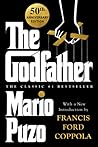
The GodfatherThe Godfather by Mario Puzo

Gratitude

Thank you, Montgomery County Public Library, for making The Godfather by Mario Puzo readily available to the public at no cost.

Description

In The Godfather, Puzo constructs a world in which when the system seems unfair for the little guy, he doesn’t need to wait for the heavens to supply justice in the afterlife, because he can appeal to Don Corleone to right the wrongs in this life. On earth, his godfather, Don Corleone, will help when all else fails. The Godfather will punish the boys who attacked his daughter, and also help the widow, the local boy who made it big, and the baker, while making sure that everyone gets a cut.

Don Corleone started as an immigrant who worked hard, but observed that another person’s power move could tip the balances—for example, a demand for protection money might change how a business operates, to the detriment of the guy at the bottom. Once he understands the way things work, Corleone decides that he will do what it takes to provide for his family, and if that means establishing his own mafia family, so be it.


Don Corleone’s sons, Sonny, Fredo, and Michael grow up in their father’s shadow. Sonny, the oldest, is hotheaded and the youngest, Michael, is defiant, enlisting in the army against his father’s wishes. Fredo, the middle boy, does not have the strength of his brothers. Connie, the baby of the family and the only daughter, is pampered and adored. The book opens on her wedding.

As with any good mafia man, Corleone’s influence is far reaching. He has many politicians in his pocket and informants in different areas, including the police department. The other families are on the look out for a weakness in the Corleone family to exploit, and they just might find one.


Would I teach this book?

Would I teach The Godfather? The Godfather has an interesting structure. It is split up into eight different books that move around from the past and story present, including telling parts of the story line from different characters’ points of view, without becoming repetitive. Puzo creates a family epic that both endears the reader to the Corleone family at the same time as laying bare the twisted morality it operates under.

In following the book’s structure and many characters, there is a lot to learn about making a simple plot line complex and creating a seemingly fantastic world within our own. To that end, it would be a good book to study in order to learn more about writing an entertaining plot. It is not high literary writing, but, as many bemoan, a lot literary novels do not put their strongest emphasis on plot. So, yes, The Godfather could be an instructional tool to that end and may also create a desire in a new generation to watch the trilogy of movies it spawned.


View all my reviews

Sunday, March 8, 2026

Why Don't You Write a Letter to the San Juan Star?: Book Review of The Correspondent


The CorrespondentThe Correspondent by Virginia Evans


Gratitude 

Thank you to the Montgomery County Public Libraries for making The Correspondent by Virginia Evans available as a lucky day book.


Description

Sybil Van Antwerp comes from another time, when there were few female judges, and to find a way to influence the court system, she spent her career clerking for a well-known judge. Sybil’s relationship with him was a working one only, but they were the closest of collaborators. She did not just advise him, they made decisions together, and to hear it told, on equal footing. Around the time the judge dies, Sybil also begins to experience deteriorating eye sight, and her already limited amount of travel shrinks even further.


Sybil communicates with the world largely through letters. She corresponds with her family and friends as well as some well-known authors, such as Joan Didion. Like Didion, she lost a child, though Sybil’s Gilbert died when he was only eight. Sybil still feels the loss with a terrible intensity that continues to impact her life in many ways. The letters include a lot of her backstory, and in an interesting way that does not slog down the plot.  

The Sybil we meet brokers no fools, as the saying goes, nor does she make departures from her quiet life, at least not easily. She can be hard and difficult, but she can also be thoughtful, caring, and willing to put up a good fight for anyone for whom she cares.


Would I teach this book? 

Would I teach The Correspondent? In a time when letters are way out of fashion, Virginia Evan’s The Correspondent may be one of the last modern-day epistolic books that is not fully emails. In fact, the author has Sybil defend her letter writing to other characters.

The book is not terribly long, which is helpful for teaching–the longer a book, the more difficult to include on the syllabus. It has a good story and great character development. It might not be as amazing as some might be claiming, but it is an enjoyable read. It is a possibility to be included in a creative writing or literature course, but it would not be in my top ten or even top twenty picks.


View all my reviews